|
Global standards, and practices are designed to ensure safe operation of rail systems for both passengers and workers. These guidelines govern system design, software development, equipment inspections, and track maintenance to prevent accidents.
Key international organizations, such as the International Electrotechnical Commission (IEC), European Committee for Electrotechnical Standardization, the IEEE, and the U.S. Department of Defense (MIL-STD) develop these functional and safety requirements. Below is a summary of the most globally adopted standards:
- EN 50126: A European norm focusing on functional safety and systematic safety management across the entire lifecycle. It introduces the Safety Integrity Level (SIL) scale, where SIL4 is the highest requirement for critical systems like signaling, interlocking, and emergency brakes. The critical concept of this standard is the SIL that consists of four levels. SIL4 is the highest level and is required for signaling and interlocking and emergency breaks. Any subsystem or requirement that fails and ends up with catastrophic accidents is classified as SIL4 and must follow rigorous processes to be developed, tested, and certified.
- IEC 62278: The international standard for managing reliability, availability, maintainability, and safety in railway applications.
- EN 50128 and EN 50129: Standards developed from EN 50126 specifically for software and signaling hardware. EN 50129 focuses on safety-related electronic systems for signaling throughout their lifecycle.
- MIL-STD-882E: Safety standard practice identifying the systems engineering approach to eliminating hazards, where possible, and minimizing risks where those hazards cannot be eliminated. This standard covers hazards as they apply to systems/products/equipment/infrastructure (including both hardware and software) throughout design, development, test, production, use, and disposal.
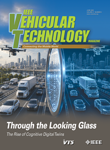
Full Article: IEEE Vehicular Technology Magazine, Volume 21, Number 2, June 2026
|