|
Our journal welcomes not only original high-quality papers covering the theoretical, experimental and operational aspects of electrical and electronics engineering in mobile radio, motor vehicles and land transportation, but also industry-focused publication focusing on research findings and suggesting ideas that may be useful to those conducting similar research.
Below, we highlight two featured peer-reviewed articles:
Our first monthly feature paper, which is written by authors from Carleton University, Medeniyet University, Polytechnique Montreal, National Research Council of Canada, and MDA, examines the fundamental tradeoff between network latency and satellite transmission power of a free-space optical satellite network (FSOSN). This study also highlights that cloud conditions significantly affect outage probability in laser uplink and downlink communications, underscoring the sensitivity of FSOSNs to atmospheric variability.
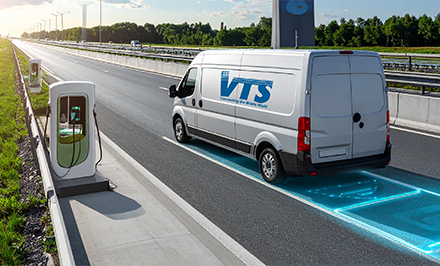
Complementing this is another feature paper co-authored by Politecnico di Milano, Zhejiang University, and Chalmers University of Technology, which introduces a reinforcement learning–based method that optimizes charging and discharging using expert pre-training and realistic grid simulations. By accounting for real battery limits and adapting to changing grid conditions, the proposed method reduces costs, avoids grid overloads, and enables EVs to support the grid when needed, offering a practical and scalable solution for integrating large EV fleets.
We’ve provided short summaries of these feature articles, written in accessible language that we hope will make your reading experience enjoyable.
Free-Space Optical (FSO) Satellite Networks Performance Analysis: Transmission Power, Latency, and Outage Probability
Jintao Liang, Aizaz U. Chaudhry, Eylem Erdogan, Halim Yanikomeroglu, Gunes Karabulut Kurt, Peng Hu, Khaled Ahmed, and Stephane Martel
Summary by Halim Yanikomeroglu: When a constellation of low Earth orbit (LEO) satellites are interconnected by laser intersatellite links (LISLs), a free-space optical satellite network (FSOSN) is formed. In such a network, the LISL range has an important impact on the overall network operation. An increase in the LISL range results in a decrease in the number of LISLs, which in turn reduces the network latency, while this increase in the LISL range also results in an increase in the transmission power of satellites. In this paper, we investigate this tradeoff between satellite transmission power and network latency in FSOSNs using Starlink Phase 1 Version 3 (i.e., the latest version of Starlink’s Phase 1) and Kuiper Shell 2 (i.e., Kuiper’s biggest shell) constellations.
We find that the mean network latency (i.e., the mean of network latency of the shortest paths at all time slots for an intercontinental connection) and the mean average satellite transmission power (i.e., the mean of average satellite transmission power of the shortest paths at all time slots for an intercontinental connection) have an inverse relationship, and the mean network latency decreases while mean average satellite transmission power increases with an increase in the LISL range. Furthermore, we observe that the cloud conditions inevitably influence the performance of the outage probability in laser uplink/downlink communications.
Full article: IEEE Open Journal of Vehicular Technology, Volume 5
Smart Electric Vehicle Charging Algorithm to Reduce the Impact on Power Grids: A Reinforcement Learning Based Methodology
Federico Rossi, Cesar Diaz-Londono, Yang Li, Changfu Zou, and Giambattista Gruosso
Summary by Giambattista Gruosso: The rapid growth of electric vehicles (EVs) is a positive step toward sustainable transportation, but it also creates new challenges for power grids. Uncoordinated charging of many EVs simultaneously can overload transformers, cause voltage fluctuations, and increase peak demand, putting stress on the network and potentially requiring costly grid upgrades.
In our work, we propose a novel method that uses reinforcement learning (RL) to optimize EV charging and discharging schedules in real-life scenarios. Our system is pre-trained with expert-generated scenarios and integrates realistic grid simulations, allowing it to make faster and smarter decisions while adapting to unexpected changes in energy demand or renewable generation.
Importantly, it also accounts for the actual characteristics and limits of EV batteries, such as their storage capacity and safe operating ranges, to ensure efficient and reliable energy management. By combining these elements, our approach reduces costs, prevents grid overloads, and allows EVs to support grid operations by providing energy when it is most needed.
Overall, it offers a practical, scalable solution to integrate EVs efficiently into the power system while keeping the grid stable, reliable, and able to support a growing EV fleet.
Full article: IEEE Open Journal of Vehicular Technology, Volume 6
Call for Papers—Special Issue on Vehicular Digital Twins: Architectures, Communication Protocols, and Applications for Internet of Vehicles Systems
With the convergence of digital modelling, 6G vehicular communication, and AI-driven autonomy, Vehicular Digital Twins (VDTs) are set to redefine how vehicles interact, adapt, and evolve in real-time. This special issue solicits high-quality contributions in systems, protocols, simulations, and real-world deployment of VDTs, with emphasis on vehicular technologies and secure communications.
We invite original contributions on, but not limited to:
- VDT architecture and multi-layer modelling
- Communication protocols (5G/6G, C-V2X) for real-time VDTs
- AI and ML for adaptive twin control
- Cybersecurity, quantum-safe VDT communication
- Blockchain and trust management
- Edge/cloud integration
- Use cases (e.g., fleet management, predictive maintenance, autonomous driving)
Submission Deadlines
Manuscript Due Date: 1 February 2026
Editorial decision – first round of review: 1 March 2026
Deadline for resubmission for manuscripts with Reject & Resubmit editorial decision: 1 May 2026
Final editorial decision: 1 June 2026
Tentative Publication Date: July/August 2026
Submission Guidelines
Prospective authors should: review the author instructions and paper submission instructions. Initial submissions may have up to 14 pages.
Authors should submit manuscripts through the IEEE Author Portal.
Lead Guest Editor
Sunil Prajapat, Gachon University, Republic of Korea
Guest Editors
Joel Rodrigues, Federal University of Piauí, Brazil
Jianwei Niu, Beihang University, China
Ahmed Farouk Metwaly, Hamad Bin Khalifa University, Qatar
About the IEEE Open Journal of Vehicular Technology (OJVT)
The IEEE OJVT covers the theoretical, experimental and operational aspects of electrical and electronics engineering in mobile radio, motor vehicles and land transportation. A brief summary of these fields of interest are as follows:
- Mobile radio shall include all terrestrial mobile services
- Motor vehicles shall include the components and systems and motive power for propulsion and auxiliary functions
- Land transportation shall include the components and systems used in both automated and non-automated facets of ground transport technology

|